

Established practices: How to apply De Novo principles
Leading practices develop over time, and they do so in real time. Rosters, consult flow, treatment spaces, pricing processes, team structure and client experience are shaped by the circumstances at hand, perhaps a different team, a different client base or a different stage of the business. Even when they still work reasonably well, one question can linger: if you were creating the practice today, would you make the same choices?
De novo founders begin with a question established owners rarely get to ask: how should this practice work if each element is chosen deliberately and designed to operate in harmony? Yet established practices can apply the same discipline, using the de novo model to reconsider what they maintain, what they refine and what may now be ready to change. Here is how those principles can strengthen a practice that is about to open its doors, or one that has been serving its community for a hundred years…
What Defines a De Novo Veterinary Practice?
At its core, a de novo veterinary practice is one created from the ground up, rather than acquired from an existing owner. But the concept extends far beyond the physical structure.
A Blank Canvas for Innovation
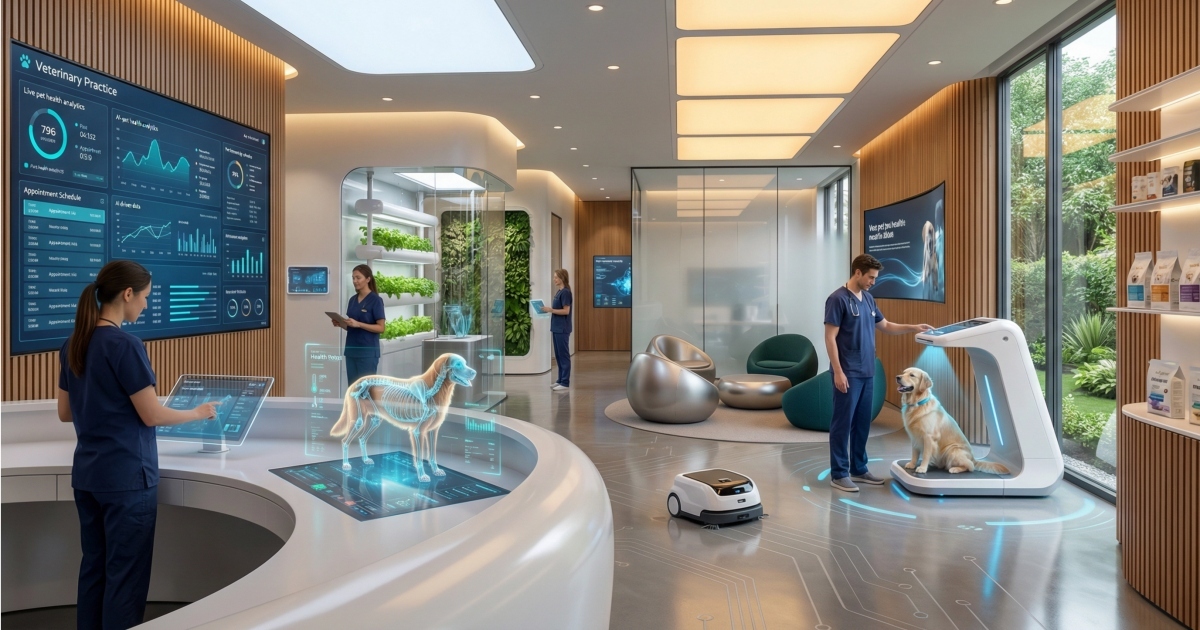
Unlike acquiring an established practice, the de novo approach offers a blank slate—everything from facility design and equipment selection to team culture and operational workflows are purposefully crafted rather than inherited and modified. This freedom allows practice founders to implement contemporary medical protocols, integrate cutting-edge technology, and design spaces specifically optimized for modern veterinary care without the constraints of existing infrastructure.
De novo practices break the traditional clinic mold through distinctive designs that eliminate longstanding pain points in practice workflow. Many are pioneering flexible scheduling models that depart from the standard 15-minute appointment blocks, implementing data-driven facility designs that reduce bottlenecks, and creating modular treatment spaces that adapt to varying caseloads throughout the day.
A Fresh Approach to Patient Care and Client Service
Beyond physical design, de novo practices can rethink how care is delivered. Some are adopting hybrid membership and fee-for-service structures, developing areas of clinical focus within general practice, and using technology-supported triage to improve access and workflow efficiency.
Digital platforms can extend the client experience beyond appointment booking through health reminders, preventive care plans, and more consistent communication. Their value depends on how well they support clinical judgement, protect client and patient information, and fit the practice’s day-to-day workflow. Some de novo practices also build community engagement into their business models, using purpose-designed spaces and programs to strengthen connections with pet owners.
Starting my clinic from scratch was daunting – the upfront costs and finding the right location and team members that ‘get it’ were the toughest parts, but it also meant I could shape everything exactly how I envisioned – Jonathan P., Practice Owner, Boulder, Colorado
Why Is the De Novo Model Gaining Momentum?
Interest in de novo veterinary practices is growing as several market forces reshape the choices available to founders, investors, and established practice owners.
Economics of Building vs. Buying
In today’s market, the financial calculation between acquiring an existing practice versus building a new one has shifted dramatically. Practice valuations reached unprecedented highs during the peak of corporate consolidation, often pricing individual veterinarians and smaller groups out of acquisition opportunities.
De novo development can offer a compelling alternative when acquisition prices are difficult to justify. Although it requires significant upfront capital and a longer path to positive cash flow, building from scratch gives founders greater control over location, scale, workflows, and cost structure. The financial case depends heavily on local demand, financing terms, execution, and the time required to build a sustainable client base.
The financial sector has recognized this shift, developing specialized funding options for de novo veterinary ventures. Lenders now better understand the unique economics of these practices, offering tailored financing packages that account for the initial ramp-up period and projected growth curves.
Responding to Evolving Client Expectations
Pet owners increasingly expect convenience, clearer communication, greater pricing transparency, and digital access that fits naturally around their lives.
De novo practices can design these elements into the client experience from day one. Without established systems to unwind, founders can choose communication platforms, pricing processes, opening hours, and in-clinic experiences that suit the clients they intend to serve. The advantage comes from intentional design rather than novelty alone.
Professional Fulfillment and Autonomy
For veterinary professionals, de novo practices represent an opportunity to reclaim autonomy and shape their ideal working environment. After years of increasing corporate influence, many veterinarians seek greater control over practice policies, medical protocols, and workplace culture.
The de novo model allows veterinary leaders to create environments that prioritize team well-being alongside clinical excellence. Many are implementing innovative scheduling approaches, collaborative compensation models, and purpose-designed workspaces that reduce burnout and increase job satisfaction—addressing critical issues facing the profession.
We saw a gap in the market that wasn’t being filled by existing practices—clients wanted more thorough appointments, transparent communication, and a practice that leveraged technology effectively. Building from zero allowed us to design everything around those core demands without having to undo decades of established patterns – Dr. Rachel M., Owner-Veterinarian, Austin, Texas
Regional Perspectives: De Novo Development Across Key Markets
De novo development takes different forms across veterinary markets, shaped by local funding, regulation, property availability, workforce conditions, and client expectations.
United States: The De Novo Epicenter
The United States has become a leading market for de novo veterinary development, supported by access to capital, a large pet care market, and strong entrepreneurial activity within the profession.
Venture capital has played a significant role in accelerating this development. Modern Animal, Small Door Veterinary, and Bond Vet each used substantial funding to establish networks of purpose-built practices. The market has since begun to mature. Modern Animal has agreed to be acquired by Chewy, while Bond Vet and Small Door Veterinary finalised their merger in July 2026, creating a combined network of more than 55 clinics that will continue operating under both brands in the near term. These developments show how some de novo networks are progressing from startup expansion to larger strategic platforms.
Beyond these venture-backed groups, individual veterinarians and regional partnerships are establishing de novo practices that respond to specific community needs. Many are targeting underserved geographic areas or demographic segments, creating practices that fill genuine market gaps rather than competing directly with established hospitals.
What distinguishes American de novo practices is their emphasis on creating distinctive brand identities that resonate with specific client segments. Rather than positioning themselves as generic veterinary providers, they’re developing focused value propositions around particular aspects of the client experience—whether that’s medical approach, service model, or practice environment.
United Kingdom: Emerging Innovation in a Consolidated Market
The UK veterinary landscape has experienced extensive corporate consolidation, with major groups like CVS, IVC Evidensia, and VetPartners controlling substantial market share. While this consolidation initially limited independent practice growth, it’s now creating distinctive opportunities for de novo ventures.
British de novo practices are often positioned as high-quality alternatives to corporate care models. They emphasize personalized service, continuity of care, and community integration—aspects some pet owners feel have diminished within highly standardized corporate environments. These new independent practices frequently retain elements of traditional British veterinary culture while modernizing the client experience.
The UK regulatory context is also changing. Following its market investigation, the Competition and Markets Authority set out reforms covering ownership disclosure, published pricing information, written estimates, medicine choices, and clearer treatment information. For de novo founders, this creates an opportunity to build transparency and client choice into their systems from the outset, rather than adding them later as compliance requirements.
Regulatory and property constraints unique to the UK market shape de novo development strategies. With limited suitable commercial property in many desirable areas, UK de novo practices often implement creative facility solutions, including adaptive reuse of non-traditional spaces, more compact clinic designs, and hub-and-spoke models that maximize efficiency in expensive urban locations.
Australia and New Zealand: Innovative Models in Growing Markets
Australia and New Zealand offer distinct settings for de novo veterinary development. Strong pet ownership and expanding communities can create opportunities for purpose-built practices, although workforce availability, local demand, property costs, and regional service needs remain decisive.
De novo practices in these markets often emphasize work-life balance alongside clinical excellence—directly addressing the wellbeing challenges facing the profession. Many incorporate innovative scheduling models, expanded support staff roles, and collaborative practice structures designed to enhance sustainability for veterinary teams.
The geographical distribution of Australia’s population has created unique opportunities for de novo practices in growing suburban corridors and regional centers. As populations shift away from city centers, new practices are establishing themselves in these emerging areas, often integrating mixed business models that combine general practice with emergency services or specialized care to meet diverse community needs.
The greatest advantage of developing our practice from the ground up in the UK market was the ability to differentiate ourselves from the corporate chains that dominate our region. We’ve built our reputation on consistency of care – clients see the same vet each visit – which has become our greatest competitive strength in a market where many practices struggle with high staff turnover – Emma W., Practice Director, Greater Manchester, UK
Challenges and Considerations for De Novo Ventures
While de novo practices offer compelling opportunities, they also present distinctive challenges that require careful navigation. Understanding these obstacles is essential for practice owners, investors, and veterinary professionals considering this path.
Financial Considerations and Capital Requirements
Establishing a de novo practice demands substantial initial investment—often requiring multimillion-dollar capital commitments when accounting for property acquisition or leasehold improvements, state-of-the-art equipment, initial inventory, staffing costs during ramp-up, and working capital reserves. This capital intensity creates a significant barrier to entry, particularly for early-career veterinarians without substantial savings or investor backing.
The financial timeline for de novo practices differs markedly from practice acquisitions. While acquired practices typically generate immediate cash flow, de novo ventures face a longer runway to profitability as they build a client base from zero. This extended ramp-up period requires careful financial planning, adequate capitalization, and realistic expectations around return timelines.
Securing appropriate financing presents another challenge. While more lenders now understand the de novo model, financing terms may be less favorable than for established practice acquisitions, which are viewed as lower risk. Creative financial structures—including equipment leasing, property partnerships, and phased build-outs—often become necessary to make projects viable.
Operational Execution and Team Building
Perhaps the most demanding aspect of de novo development is simultaneously establishing operational systems while building a cohesive team and attracting clients. Unlike an acquired practice with existing workflows and staff, everything must be created concurrently.
Recruiting becomes particularly challenging when there’s no established practice reputation or client base to demonstrate stability. Attracting talented veterinarians and support staff often requires offering compelling compensation packages, growth opportunities, or equity participation that may initially strain tight budgets.
Another operational consideration is the steep learning curve for first-time practice owners. Those without previous ownership experience must rapidly develop business management skills alongside clinical responsibilities—a significant undertaking that can lead to burnout if not properly supported through mentorship or management partnerships.
Market Positioning and Competitive Dynamics
Establishing market position presents a distinct challenge for de novo practices. Without an existing client base, these ventures must develop effective strategies to attract pet owners who may already have relationships with established practices.
Geographic placement becomes critical, with successful de novo practices often targeting areas with population growth, limited veterinary services, or specific demographic profiles aligned with their service model. Poor location selection can significantly extend the path to profitability or limit growth potential regardless of practice quality.
Differentiation represents another key challenge. In competitive markets, de novo practices must clearly articulate their value proposition—whether through service offerings, practice culture, or client experience—to stand out from established competitors with loyal client bases.
The biggest challenge wasn’t building the facility or even finding the money—it was staffing up while simultaneously developing our operational systems and attracting enough clients to keep the lights on. We vastly underestimated how difficult it would be to hire in this market, especially when we couldn’t yet show potential team members an established, successful practice – Dr. Michael B., Founder, Perth, Australia
Future Outlook: What’s Next for De Novo Veterinary Practices?
The de novo veterinary practice model is still in its early stages of evolution, with significant growth and innovation on the horizon. Understanding emerging trends and future directions can help practice owners and investors make strategic decisions in this dynamic landscape.
Continued Evolution of Practice Models
De novo veterinary practices are likely to continue diversifying their operational models beyond traditional full-service hospitals. Emerging trends suggest we’ll see increasing specialization, with practices focusing on specific service niches like preventative care, dental-only clinics, or same-day urgent care that complement rather than compete with primary care providers.
Practice footprints are evolving as well, with many new ventures adopting smaller, more efficient clinic designs that maximize profitability per square foot. This “right-sizing” approach focuses on creating purpose-built spaces for specific service offerings rather than traditional all-purpose hospitals that attempt to accommodate every possible need.
Technology will remain a central design choice for many de novo practices, including diagnostic systems, telemedicine platforms, and AI-assisted workflows. These tools can improve access, consistency, and administrative efficiency when they are selected around clear clinical needs. Their use also requires appropriate oversight, data protection, and compliance with the rules governing veterinary care in each jurisdiction. Starting from scratch gives founders the chance to build those safeguards into the workflow from the beginning.
Investment and Ownership Trends
The financial landscape for de novo practices continues to evolve, with new investment structures emerging. Beyond traditional bank loans, we’re seeing increased interest from private equity, healthcare-focused investment groups, and even consumer-focused venture capital entering the veterinary space with specific interest in de novo opportunities.
Ownership models are diversifying as well, moving beyond the traditional single-owner paradigm. Many successful de novo ventures now implement collaborative ownership structures that distribute equity among multiple veterinarians or between veterinarians and non-clinical partners. These approaches help address capital constraints while creating aligned incentives for long-term practice growth.
Strategic partnerships are becoming increasingly important, with de novo practices forming alliances with complementary businesses, specialty referral centers, and even human healthcare entities. These relationships enhance service offerings while creating differentiated market positions that would be difficult for traditional practices to replicate.
Impact on the Broader Profession
The rise of de novo practices is influencing the entire veterinary profession beyond those directly involved in these ventures. As innovative models demonstrate success, traditional practices increasingly adopt elements from these new approaches—whether in facility design, service delivery, or team structure.
Employment patterns are shifting as well, with de novo practices creating new career pathways beyond the traditional associate-to-owner progression. Many offer hybrid roles combining clinical work with operational responsibilities, specialized positions focusing on particular medical interests, or management tracks that don’t require practice ownership—all helping retain talent within clinical practice.
Client expectations continue to evolve partly in response to de novo innovations, creating a virtuous cycle of improvement across the profession. As pet owners experience enhanced service models, transparent communication, and modern digital interfaces, they increasingly expect similar experiences from all veterinary providers, driving industry-wide advancement.
Looking at the next five years, I believe the real innovation in our profession will come from de novo practices that can implement radical ideas without the constraints of legacy systems. The most successful will combine clinical excellence with business models that prioritize both client experience and team wellbeing—ultimately creating sustainable practices that thrive regardless of market conditions – Dr. Jennifer T., Development Director, Multi-Hospital Group, Toronto, Canada
Closing thoughts…
The deeper lesson from de novo founders is not that newer practices are inherently better. It is that practice design remains an active leadership responsibility long after the doors first open. You can preserve the history, relationships and systems that still serve your practice well while continuing to ask whether each element supports the team, clients and future you are working towards.
Over the next week, choose one system that shapes daily work, such as consult flow, pricing communication, handovers or roster design. Spend thirty minutes with two or three team members mapping how it works now, where friction appears and one change worth testing over the following fortnight. Applying de novo thinking in an established practice starts with choosing deliberately what happens next.
About Us
Veterinary Jobs Marketplace
Making connections matter…
A global community where the best veterinary professionals and practices find each other.
Explore our Regions:
